
Peach County Court Record Requests
Address the office that actually holds the file. The Peach Clerk of Superior Court keeps Superior and Juvenile records. Each other court keeps its own Peach County records. Magistrate, Probate, Fort Valley Municipal, and Byron Municipal courts maintain their own files. The county administrative clerk handles Board of Commissioners material only. Court requests sent there get forwarded to a court office.
Going online is just one route. Georgia Courts E-Access sends Superior users to PeachCourt, which requires an account. You can also call the proper clerk, visit the counter, or mail a focused request. Fort Valley accepts document requests in person, by mail, or by email. Probate and Byron Municipal Court offer no full public online record search.
- Identify the court, case number, parties, and approximate filing date.
- Name the docket, order, judgment, pleading, or other item needed.
- Choose online access, phone, counter, mail, or an available email route.
- Ask whether the file is public and request a cost estimate.
- State clearly whether a plain or certified copy is required.
Three Peach County Record Products
A docket, a filed document, and a certified copy are three different products. The docket is the dated procedural trail. Behind each entry sits the filed document itself. That document might be a pleading, motion, order, judgment, or exhibit image. A certified copy carries the clerk's authentication for official use.
- Docket or index
- Case number, filings, dates, settings, and dispositions where published.
- Filed document
- The text or image behind an entry, subject to access limits and fees.
- Certified copy
- A clerk-authenticated reproduction. A portal screenshot is not certified.
Only the custodian controls certification, even when a vendor displays the file. That rule keeps a paid image from passing as an official certified Peach County court record. Confirm the copy type before you order.
Kinds of Peach County Court Records
Peach County files mirror each court's authority. Superior records cover felony, domestic-relations, and general civil matters. Magistrate files handle small claims, dispossessory cases, garnishments, and limited matters. Probate keeps estate, guardianship, permit, vital-record, and county misdemeanor traffic material. City ordinance and citation files sit with the municipal clerks.
- Docket sheets and calendar entries
- Complaints, petitions, answers, and motions
- Orders, judgments, and recorded dispositions
- Public exhibits and attachments
- Probate minute books and estate records
Juvenile records are not ordinary public files. Sealed documents, adoption material, and protected identifiers also stay outside open vendor access.
Peach County Records Need Custodians
The official County Clerk and Administrator's Office page illustrates a common trap. The county clerk is not the clerk of court. A Superior order request sent there just gets referred along. Address it to the office that created and keeps the record.
The administrative open-records form can model a clear request. It is not the route for court documents. Georgia offices produce existing records. They need not create a new report or compilation.
The county office page spells out the administrative role. That role is separate from Peach County court files.
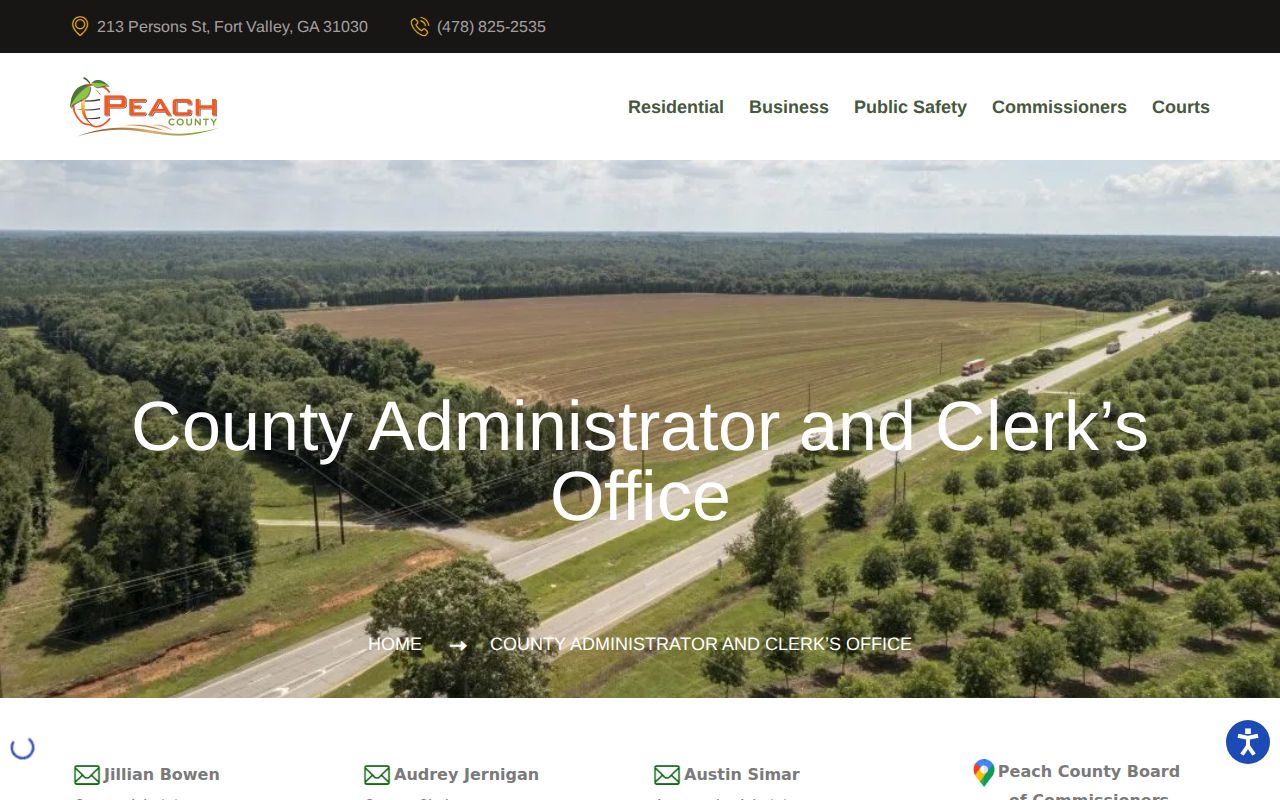
That distinction routes a case-file request toward the proper court custodian.
Court Records: What They Contain
A public file often supplies enough facts to match a record and follow its progress. Not every listed item will be viewable online, though.
| Case number | The court identifier used to locate and request the file. |
|---|---|
| Docket entries | A dated list of filings, settings, rulings, and disposition activity. |
| Pleadings | Petitions, answers, motions, and responses filed by parties. |
| Orders and judgments | Signed rulings that resolve a request or the case. |
| Exhibits | Filed attachments when public access is allowed. |
A docket entry is not the full court record. It may name an order yet show no image of it. When a piece of a Peach County case file seems absent, ask the clerk whether it is paper-only, delayed, restricted, or simply ready for a copy charge.
PeachCourt Document Access Costs
Georgia Courts E-Access routes Peach Superior users to PeachCourt. The service requires an account. PeachCourt says many participating courts have docket data back to about 2005, but it does not promise every old document online. Some images arrive from the court system after a short wait.
Current help lists a $2 eAccess charge per document for a user who is not the e-filer of record, $0.50 per page, and a 3.5% plus $0.30 convenience charge. An e-filer of record gets access to that user's own civil e-filed documents without those document charges. Manually filed and criminal material may still cost money. Check checkout, because older help text differs.
Portal access is not certification. The clerk, not PeachCourt, authenticates the copy.
Copy Fees and Certification
A plain copy reproduces a record; a certified copy adds the clerk's authentication. Magistrate Court posts current charges. The available Superior schedule is dated January 2, 2020, so confirm it before paying.
| Office and item | Posted amount |
|---|---|
| Magistrate regular copy | $0.50 |
| Magistrate certified copy | $5.00 |
| Superior regular copy, 2020 | $0.50 each |
| Superior certified copy, 2020 | $2.50 plus $0.50 per page after the first |
Probate, Juvenile, and municipal offices publish no complete current schedule. Ask that custodian for the live amount and payment method. Magistrate accepts checks or money orders only.
Clerk of Superior Court
205 West Church Street
Fort Valley, GA 31030
478-825-5331
Write a Focused Peach County Request
Name the custodian, case or citation number, record type, and date range. State the format you want, whether electronic, paper, or certified. Broad wording may increase time and cost. Ask for an estimate first, and give the clerk a way to clarify the scope.
The Georgia Attorney General's guidance says a request may be oral or written. Writing preserves scope and timing. If part is withheld, ask for the legal or court-order basis. Ask too whether a redacted part can be released.
The state guidance shows how to identify an existing record and direct it to its custodian.
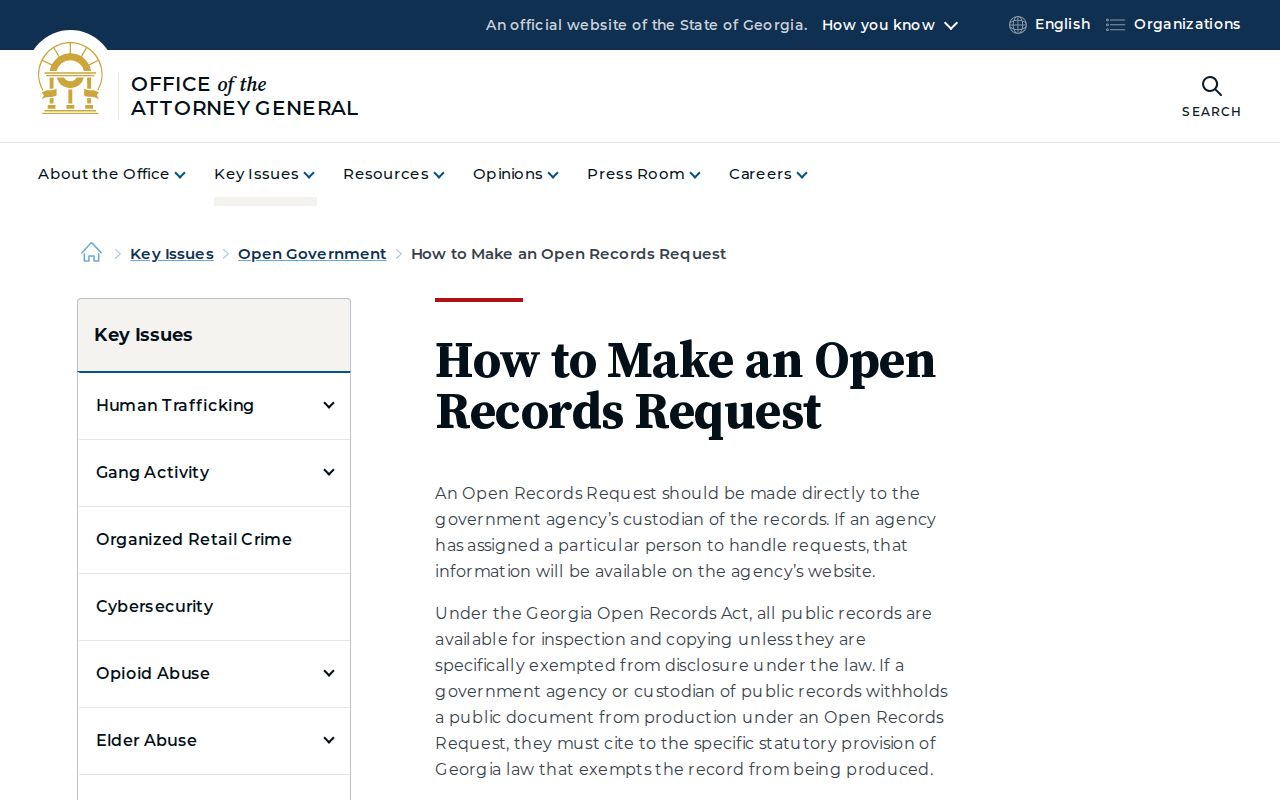
Keep a Peach County records request tight so the clerk can pull the file rather than build a new compilation.
Access Rules for Peach County Records
Georgia law leans toward letting the public see records that already exist. Court rules and sealing orders still govern what leaves a case file. Juvenile matters stay restricted, along with sealed cases, protected identifiers, and certain sensitive exhibits. Paying a fee or logging in does not change those limits.
Electronic filings that qualify count as court records under the e-filing standards. The same controls are preserved. A terminal at the Peach County courthouse can sometimes show more than a remote account does. When only part of a filing is protected, ask the clerk for a redacted copy. Do not request the whole thing instead.
Key Rules:
O.C.G.A. §§ 50-18-70 through 50-18-72 set access, response, and exemption principles.
Uniform Superior Court Rules 21 and 21.6 address access and protected information.
Statewide electronic filing standards govern electronic records and public terminals.
Note: One protected part does not force the entire Peach County court record to stay closed.
Older Peach County Court Records
Digging for an older Peach County court record takes more detail than a modern portal search. The county dates to 1924. Its court work passed through several buildings before the 1936 courthouse opened. Fire damaged that courthouse in 1969. Restoration plus later additions followed. So an old case may live on paper. It may sit in a minute book or some other format. A searchable image is not guaranteed.
Give the clerk the court name and a rough year, not just a party name. Ask whether the filing sits in an older index, off-site storage, or a paper file. Probate keeps its minute-book documents available permanently. If no image shows up online, contact the office that holds the record. That gap is not proof the Peach County court record was never filed.